
Synthesizer
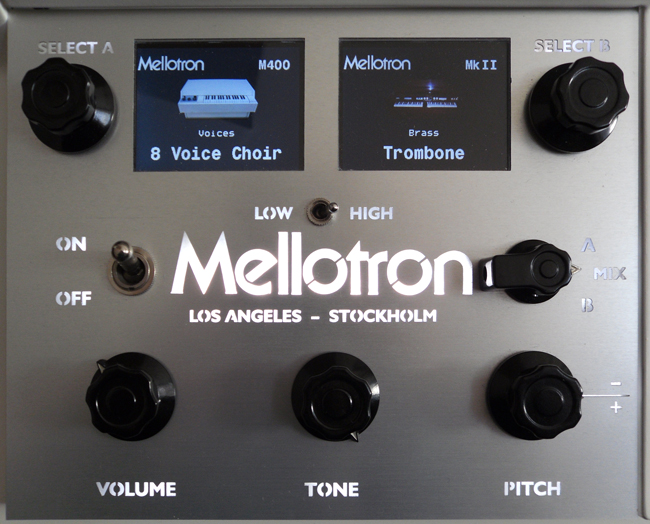
Mellotron Digitales Mellotron M4000DThe new digital Mellotron was very well received at NAMM 2010 and Frankfurt 2010. It and has been developed by us here at Mellotron and is solely our own product and has nothing to do with any other manufacturer. Some initial specifications:It is a 24 bit digital uncompressed audio playback unit with ca 100 Mellotron and Chamberlin sounds. Extra cartridges will be available. It has a custom built full Mellotron style wood keyboard with depth sensitivity. The front panel user inteface has 2 TFT-displays of high quality and are capable of showing pictures of the actual instruments. The dimensions of the cabinet are 34"x19.5"5.25" (86x50x13.5cm) (WxDxH). Here are some pictures of the digital Mellotron with it's user interface and a side and back view of the cabinet.We will be at Frankfurt Musikmesse 2011 in the EMC booth (Moog distributor for Germany) in hall 5.1 booth C47.

The M4000D MINI Mellotron was developed to meet the needs of keyboardists who want an even smaller and lighter Digital Mellotron. The MINI is also designed to fit perfectly on top of the regular M4000D to make a great looking dual manual Mellotron. Same features, sounds and front panel as the M4000D. Only differences compared to the M4000D: High-quality semi-weighted Fatar piano style keyboard with velocity sensitivity. No aftertouch. Lightweight sheet metal cabinet, fits perfectly on the M4000D, total weight only 21 pounds (9.5 kg). Same output signals as the M4000D, but only unbalanced 1/4" connectors. The weight is 9.5 kg instead of 17.5 kg for the regular M4000D. Dimensions: 807x329x76 mm
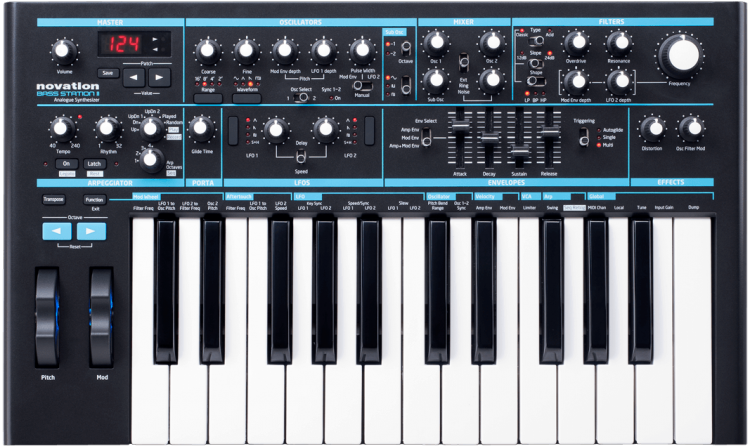
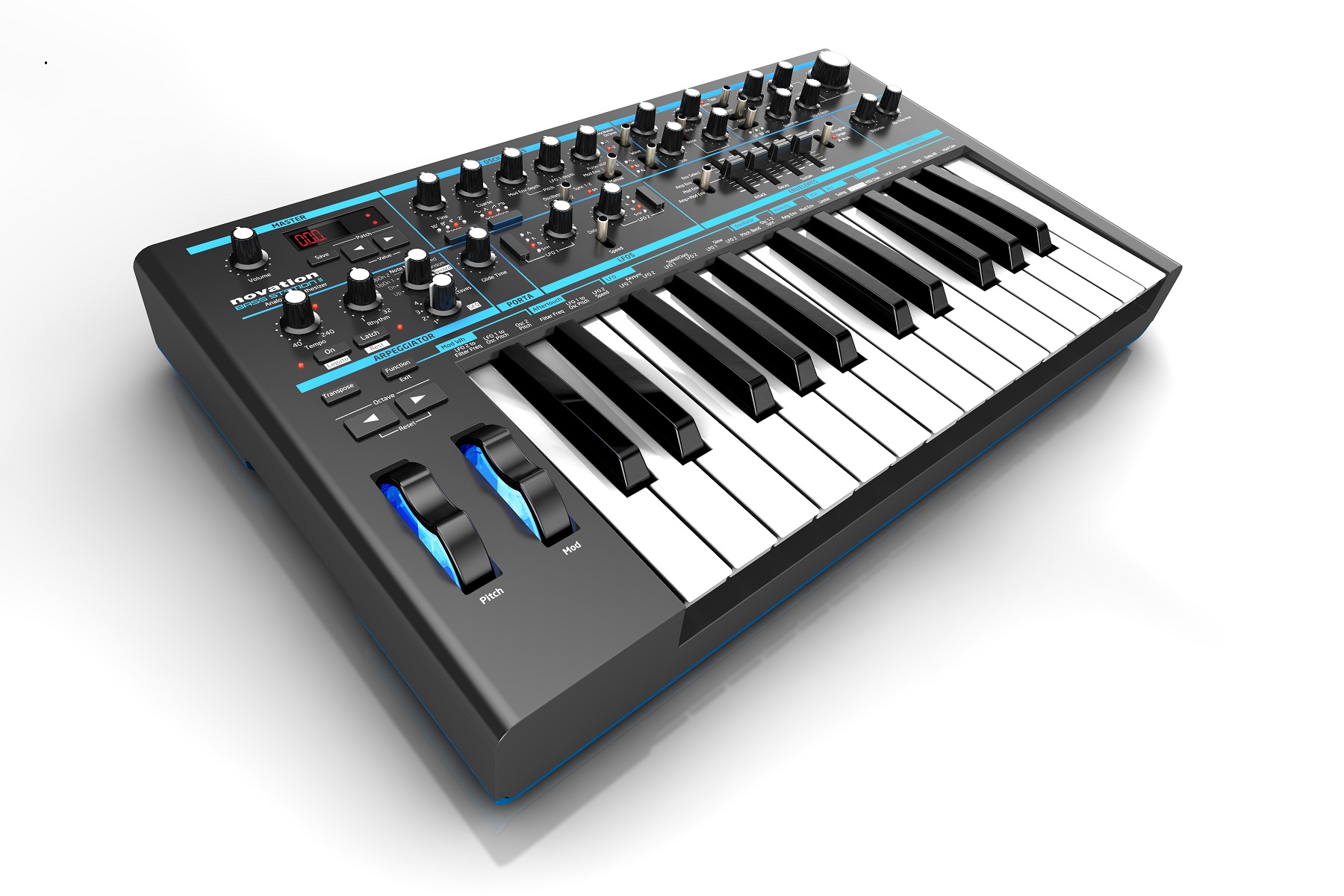
The analogue monosynth reborn Nothing out there sounds this warm, fat and dirty. Bass Station II is our pure analogue monosynth. We based it on our classic Bass Station, then enhanced every area to make it even bigger, angrier and more versatile. It has two tuneable oscillators, a sub-oscillator for enormous bass, plus noise and ring modulation. It also gives you two distinct analogue filter types: the classic multi-mode filter and a new acid filter, for a massive variation in sonic possibilities. Artist Soundpack We decided to put a call out to a handful of our Bass Station II artists to have them create some patches for a new soundpack. Here’s the roster of analogue noodlers who got involved: Nite Jewel, Cian from Super Furry Animals, Jeremy from Everything Everything, Jason Miles, Victor Parris Mitchell, Adam Freedland. Much More Than Bass This synth can sound as mellow or aggressive as you want. Seek out sweet spots with the filter mod to make it sing. Crank the distortion and it will growl with pent up anger. Push the resonance to self oscillation to create shrieking leads. Bass Station II can sound however you feel. Easy Controls for Complex Design We put as many controls as possible onto Bass Station II, so you can totally lose yourself in discovering and creating new sounds. Of course, we also laid out all those controls in the clearest and most useful way, to keep sound design as straightforward and fun as possible. Save and Load Patches We loaded Bass Station II with 64 diverse patches that showcase its huge sonic variation. We also left 64 slots free, so you can easily save and load your own patches on the unit, or in the free librarian software. Instant Inspiration Bass Station II's pattern-based arpeggiator and step sequencer are a fun and immediate way to find new inspiration. The sequencer lets you record your own notes, ties, rests and rhythms in real time, then store them, recall them and use them with any patch you like. Easily and automatically sync them to your music software or hardware setup, or even add swing to get your groove going. Connect to Just About Anything Bass Station II is fully class compliant, so you can plug into anything via USB and start playing. It also has MIDI I/O on 5 pin din ports, so you can connect your other MIDI gear. You can even connect an external instrument and run it through Bass Station II's analogue filter and effects.


MiniNova is a compact, super-cool studio and live synth with the same sound engine as its big brother; UltraNova. It comes with 256 incredible onboard sounds that you can tweak with five knobs, or totally warp with eight 'animate' buttons. It has up to 18 voices with as many as five synth effects on each sound. MiniNova also has an onboard VocalTune™ effect as well as a classic vocoder so you can recreate iconic vocal sounds from hip hop, urban and electronic music.Small synth, big soundsDon't let its size fool you. MiniNova is the latest in the 'nova' range of synths dating back to the legendary Supernova series. It has the same incredibly powerful sound engine and synth effects as the Novation UltraNova which means it is capable of creating dirty-fat bass synth sounds, soaring leads, lush pads and vintage synth sounds. All this in a 37 mini-key form with a USB port and MIDI i/o so you can hook it up to your laptop and control your music software or connect it to another keyboard or sound module.TutorialsMininova – Selecting Sounds:This tutorial gives you an overview of the Mininova's sounds and how to preview, edit and affect them. The Mininova arpeggiator's sequence buttons and powerful filter controls are also demonstrated. There are a number of exiting sounds for you to play with, edit, and save - or you can simply create your own patches and store them in 128 available slots. Mininova – Vocoder and Vocaltune: This tutorial demonstrates the on-board Vocoder, Vocaltune and effects of the Mininova.For more tutorials visit www.youtube.com/NovationTVClassic & brand-new vocal effectsMiniNova takes vocal effects one-step further. As well as a vocoder, it has VocalTune. This means you can talk into the mic and play the tune you want your voice to follow on the keyboard recreating those classic hip hop / urban vocal effects. You can also run your voice through MiniNova's effects engine, adding reverb, distortion, chorus/phase, gator compression or EQ. This doesn't need to be limited to your voice; there is an input into which you can plug a guitar or any other instrument and give it the same treatment; effects or vocoder.Choose your sound - and get more for freeMiniNova has 256 onboard sounds and space to save another 128 of your own sounds. You can quickly search for sounds by selecting the style of music you're making, or the type of sound you're after whether it's bass synth, lead - hip hop or techno. MiniNova comes with a free software Patch Librarian so you can store as many sounds as you want on your computer. If 256 is not enough, there are numerous soundpacks for MiniNova assembled by renowned artists and sound designers. These include plenty of vintage synth sounds. They can be downloaded free from: novationmusic.com/soundpacks.The 'Animate' performance modeSwitch to 'Animate' mode and press one of the 8 backlit buttons (whilst playing the keyboard) to trigger awesome performance functions Jam with the ArpeggiatorSwitch to 'Arpeggiator' mode to jam with arpeggiator rhythms in realtime. The 8 buttons act like an arpeggiator step sequencer so you can switch steps in and out!Editing software includedEditing sounds in such a powerful synth can be overwhelming, so we've created a software application that gives you visual access to the synth engine. The MiniNova Editor works as a plug-in within your DAW or music software. You can fully edit MiniNova using the hardware; the software just makes it easier to see what you are doing.The Synth Engine and effectsMiniNova has an enormously powerful sound engine and synth effects, unheard of in a micro synth. There are 14 conventional waveforms to choose from (square, sine, sawtooth, pulse, triangle and combinations), 36 wavetables and 20 digital waveforms. Each of the 3 oscillators (per voice) have density/detune for fattening up sounds, virtual sync and 'hardness' - which acts as an additional lowpass filter. There are 14 filter types (and you can run 2 simultaneously), 6 envelope generators, 3 LFOs and 20 modulation slots where you can link modules of the synth engine together to shape sound. MiniNova can add up to 5 effects to each sound including distortion, reverb, chorus/phase, delay, compressor, EQ and Novation's unique gator effect.Instant editing and performance controlThe 'Perform' section enables you to access the synth and effects engines by switching between 6 positions to assign 4 knobs, giving you instant access to 24 sound-bending parameters.

Aufbauend auf den innovativen Grundlagen von Novation Peak ist Summit ein 16-stimmiger Synthesizer mit drei Oszillatoren pro Stimme, der sich an Profi- und Semiprofi-Musiker richtet, die ein inspirierendes und leistungsstarkes Instrument für den Live- und Studio-Einsatz suchen. Genau genommen liefert dir Summit sogar die Power von zwei Peaks, denn du kannst zwei völlig unabhängige Patches auf die Klaviatur aufteilen oder sie in Layern anordnen, um im Handumdrehen zwischen ihnen hin und her zu schalten. Außerdem wurde das Layout vom Peak erweitert, sodass viele „versteckte“ Kontrollelemente und Funktionen direkt über die Frontblende zugänglich sind – FM-Routing, die LFOs 3 und 4, alle Arpeggiator-Parameter und vieles mehr – und natürlich die Pitch- und Mod-Räder. Summit bringt außerdem zahlreiche neue Filteroptionen und einen Audioeingang zur Verarbeitung externer Quellen mit seinen Reverb-, Chorus- und Delay-Effekten mit. Herzstück von Summit sind drei digitale New Oxford-Oszillatoren pro Stimme, die auf dem FPGA-Chip (Field Programmable Gate Array) basieren. Außerdem erzeugt der Synthesizer authentische Wellenformen im Analogstil mit unglaublich hoher Auflösung, was die FM- und Wavetable-Synthese erleichtert und reichhaltige, komplexe und hochtexturierte Rohklänge ermöglicht. Jede Stimme bespielt einen True Stereo-Signalpfad aus gedoppelten Analogfiltern, drei analogen Distortion-Stufen und analogen VCAs, während du deine Patches mit einer Vielzahl von Modulationszuweisungsoptionen und drei vielseitigen Effekten aufpolieren und zum Leben erwecken kannst. Der Peak mit Extra-Power Die gefeierte Peak-Architektur erreicht das nächste Level: Mit 16 Stimmen, erweiterten Steuerelementen an der Frontblende, neuen Filteroptionen, einem Keyboard über fünf Oktaven und mehr Zwei Klänge auf einmal Multitimbrale Engine zum Aufteilen, Stapeln und Umschalten zwischen zwei Patches gleichzeitig Digital dort, wo es zählt Digitale, auf FPGAs platzierte New Oxford-Oszillatoren für Wavetable- und FM-Synthese im Analogstil Analog dort, wo es drauf ankommt Gedoppelte Analogfilter, analoge VCAs und drei analoge Distortion-Stufen pro Stimme Effekte und Arpeggiator für jeden Bereich Verarbeite jeden Bereich oder ein externes Audiosignal mit Reverb-, Chorus- und Delay-Effekten, erzeuge Riffs und Melodieläufe mit verschiedenen Arp-Modi, einstellbarer Gate-Dauer und Preset-Patterns Multitimbraler, polyphoner Synthesizer mit 16 Stimmen auf zwei Bereichen Drei NCO New Oxford-Oszillatoren pro Stimme, die subtraktive, Wavetable- oder FM-Klangerzeugung ermöglichen Analoge Multimodus-Filter mit 12/24 dB pro Stimme mit Doppelmodus Hochwertiges, halbgewichtetes Tastenbett über fünf Oktaven mit Anschlagdynamik und Aftertouch Effekte für jeden Bereich: Distortion, Chorus, Delay und Reverb Stereo-Audio-Eingang, kann auf Onboard-Effekte und Aux-Ausgänge geroutet werden Features: Multitimbraler, polyphoner Synthesizer mit 16 Stimmen auf zwei Bereichen Drei NCO New Oxford-Oszillatoren pro Stimme, die subtraktive, Wavetable- oder FM-Klangerzeugung ermöglichen Analoge Multimodus-Filter mit 12/24 dB pro Stimme mit Doppelmodus Hochwertiges, halbgewichtetes Tastenbett über fünf Oktaven mit Anschlagdynamik und Aftertouch Effekte für jeden Bereich: Distortion, Chorus, Delay und Reverb Stereo-Audio-Eingang, kann auf Onboard-Effekte und Aux-Ausgänge geroutet werden

FEATURES: 8-voice, pure-analog polyphony with sine, saw, square, triangle, and noise Two discrete SEM/OB-X-lineage VCOs per voice deliver classic punchy Oberheim tone Discrete SEM-lineage VCFs deliver authentic OB-X-style tone and presence Genuine Curtis filters add bold OB-Xa/OB-8 character Meticulously modeled envelope responses match each OB model: OB-X, OB-Xa, and OB-8 The 61-key FATAR velocity- and touch-sensitive keyboard allows unparalleled expression and responsiveness Bi-timbral capability allows two presets simultaneously for splits and doubles 400-plus factory programs, including the full set of factory sounds for the OB-X, OB-SX, OB-Xa, and OB-8 Integral, fanless, heatsink-free power supply Real walnut end cheeks High-resolution OLED display enables patch management and easy access to advanced features Classic Oberheim Pitch and Mod levers allow expressive note bending, vibrato, and access to arpeggiator functions ENHANCEMENTS: Additional SEM filter modes add high-pass, band-pass, and notch functions to the classic OB-X filter Vintage knob allows variable amounts of voice-to-voice variability to emulate the behavior of vintage instruments Velocity sensitivity adds expressiveness to volume and filter Channel Aftertouch adds real-time performance-based modulation Enhanced unison allows variable voice stacking from 1-8 voices Variable triangle wave cross-modulation Over 600 user-programmable preset locations Programmable per-voice pan allows wider stereo presence Variable oscillator and noise levels


Thomas Elroy Oberheim. TEO - der TEO-5 ist ein modernes Instrument mit klassischer analoger Klangerzeugung, aber dennoch elegant und leistungsstark für die klanglichen Anforderungen von heute. TEO-5 fängt die Geheimnisse des OB-X, Four Voice und TVS ein, deren legendärer Geist in eine kompakte, erschwingliche Traumfabrik gebracht wurde. Es ist das, was Tom, der Maestro höchstpersönlich, schon immer bauen wollte: eine zeitlose Klangpalette, unverfälscht und zugänglich. Der TEO-5 ist Ihr klanglicher Reisepass - vom Studio bis zur Bühne. Ein Tor zum Erbe von Oberheim und ein preiswerter Einstieg in Ihr Hobby. Egal, ob Sie ein erfahrener Profi sind, der ein kompaktes Kraftpaket sucht, oder ein neuer Künstler, der sein analoges Abenteuer beginnt, TEO-5 lädt Sie ein.


Two Legends. One Instrument The OB-6 is a once-in-a-lifetime collaboration between the two most influential designers in poly synth history, Dave Smith and Tom Oberheim. The OB-6 takes the classic bold Tom Oberheim sound — with its true voltage-controlled oscillators, 2-pole filter, and amplifiers — and adds modern enhancements such as studio-quality effects, a polyphonic step sequencer, an arpeggiator, and more. No other modern analog poly synth can boast such a pedigree or such a massive, in-your-face sonic signature. Vintage SEM Tone The OB-6 sound engine is inspired by Tom’s original SEM, the core of his acclaimed 4-voice and 8- voice synthesizers. It features two discrete voltage-controlled oscillators (plus sub-oscillator) per voice with continuously variable waveshapes (sawtooth and variable-width pulse, plus a triangle wave on oscillator 2). The classic Oberheim-inspired 2-pole, state-variable, resonant filter provides low-pass, high-pass, band-pass, and notch functionality. Voltage-controlled amplifiers complete the all-analog signal path. Dual Effects The dual effects section provides studio-quality reverbs, delays (standard and BBD), chorus, flangers, and faithful recreations of Tom’s original phase shifter and ring modulator. While the effects themselves are digital, with 24-bit, 48 kHz resolution, a true bypass maintains a full analog signal path. X-Mod and Poly Step Sequencing Also present is X-Mod, which expands the tonal palette and makes it easy to create dramatic and unconventional sounds. Modulation sources are filter envelope and oscillator 2, both with bi-polar control. Destinations include oscillator 1 frequency, oscillator 1 shape, oscillator 1 pulse width, filter cutoff, and filter mode. The polyphonic step sequencer allows up to 64 steps and up to 6 notes per step. You can create sequences polyphonically, with rests, and sync to an external MIDI clock. The full-featured arpeggiator can be synced to external MIDI clock as well. Unison mode features configurable voice count (1-6 voices), chord memory, and key modes. Easy to Program The knob-per-function front panel puts virtually all OB-6 functions at your fingertips. Included are 500 permanent factory programs and 500 rewritable user programs. Turning on the Manual button enables live panel mode, in which the sound of the OB-6 switches to its current front panel settings. In this state, what you see is what you hear. Easy to Play This analog powerhouse is packed into a four-octave, semi-weighted keyboard with velocity and channel aftertouch, making it perfect for stage or studio.


3 OSCILLATORS Two analog, voltage-controlled oscillators One DSP-based digital oscillator Analog oscillators produce three classic wave shapes: (triangle, saw, pulse) with variable shape modulation/pulse width on each Digital oscillator produce 32 digital wavetables of 16 waves each with wave morphing, plus classic wave shapes (sine, triangle, saw, variable-width pulse) and super saw Digital oscillator 3 can function as an LFO for complex wavetable-based modulation White noise generator Hard sync, per-oscillator Glide, Oscillator Slop 3-VOICE PARAPHONIC PLAYABILITY 3-voice paraphonic mode with individually-gated envelopes per oscillator 3 FILTERS Three classic filter types Filter 1 is a 4-pole, 24 dB per-octave, Prophet-6™ low-pass filter Filter 2 is a classic, 4-pole, 24 dB per-octave, transistor ladder filter with optional resonance compensation Filter 3 is a 2-pole, 12 db per-octave, OB-6™ state-variable filter. It can be continuously varied between low-pass, notch, and high-pass operation, with an optional band-pass mode. 3 LFOS Three syncable LFOs with phase offset and slew per LFO Five waveshapes: triangle, saw, reverse saw, square, and S&H 4 ENVELOPES Four ADSR envelopes with delay (Filter, VCA, and two Auxiliary envelopes) Envelopes freely assignable to multiple modulation destinations All envelopes can repeat/loop DIGITAL EFFECTS Dual digital effects Stereo delay, BBD delay, chorus, flanger, phaser, ring mod, vintage rotating speaker, distortion, high-pass filter, super plate reverb FEEDBACK AND DISTORTION Tuned feedback with Grunge for extra-aggressive tonal destruction Programmable analog distortion 32-SLOT MODULATION MATRIX 32 slot modulation matrix with over 46 mod sources and over 171 mod destinations Modulation assignment buttons enable quick and easy modulation routing Mod Matrix runs at audio rates 4 CONTROL VOLTAGE INS & OUTS AND GATE OUT Four control voltage (CV) inputs and outputs for interfacing with modular synths and other CV-compatible devices Parameters that can be sent to CV outputs include oscillators, LFOs, envelopes, sequencer tracks and any other source within the modulation matrix. Runs at audio rates. Gate Out for triggering external CV-compatible devices. Any CV in can be used as a gate input. 16-TRACK SEQUENCER Advanced sequencer with three modes: normal, gated, and trigger 16 tracks and 4 linkable 16-step phrases Per-step ratcheting, duration, and velocity Multiple playback modes: forward, reverse, forward/reverse, random Supports real-time/step input, rests, and variable-length sequences Syncs to MIDI clock and external audio and CV input Sequences freely assignable to any modulation destination ARPEGGIATOR Sophisticated arpeggiator with up, down, up+down, random, assign modes Syncs to MIDI clock and external audio and CV inputs Re-latching arpeggiation Runs concurrent with Sequencer for arpeggiated patterns with parameter automation CONTROLS Over 60 knobs and 70 buttons enable deep, comprehensive editing with minimal menu diving Backlit pitch and mod wheels are easily visible in low-light situations and have a smooth, precise response. Independently adjustable upper and lower pitch wheel range Position-sensitive latchable touch slider for enhanced interactivity and control Full-sized, three-octave, semi-weighted keyboard with velocity and aftertouch MEMORY 512 user and 512 factory programs Playlist mode for generating easily accessible set lists of your favorite programs


3 OSCILLATORS Two analog, voltage-controlled oscillators One DSP-based digital oscillator Analog oscillators produce three classic wave shapes: (triangle, saw, pulse) with variable shape modulation/pulse width on each Digital oscillator produce 32 digital wavetables of 16 waves each with wave morphing, plus classic wave shapes (sine, triangle, saw, variable-width pulse) and super saw Digital oscillator 3 can function as an LFO for complex wavetable-based modulation White noise generator Hard sync, per-oscillator Glide, Oscillator Slop 3-VOICE PARAPHONIC PLAYABILITY 3-voice paraphonic mode with individually-gated envelopes per oscillator 3 FILTERS Three classic filter types Filter 1 is a 4-pole, 24 dB per-octave, Prophet-6™ low-pass filter Filter 2 is a classic, 4-pole, 24 dB per-octave, transistor ladder filter with optional resonance compensation Filter 3 is a 2-pole, 12 db per-octave, OB-6™ state-variable filter. It can be continuously varied between low-pass, notch, and high-pass operation, with an optional band-pass mode. 3 LFOS Three syncable LFOs with phase offset and slew per LFO Five waveshapes: triangle, saw, reverse saw, square, and S&H 4 ENVELOPES Four ADSR envelopes with delay (Filter, VCA, and two Auxiliary envelopes) Envelopes freely assignable to multiple modulation destinations All envelopes can repeat/loop DIGITAL EFFECTS Dual digital effects Stereo delay, BBD delay, chorus, flanger, phaser, ring mod, vintage rotating speaker, distortion, high-pass filter, super plate reverb FEEDBACK AND DISTORTION Tuned feedback with Grunge for extra-aggressive tonal destruction Programmable analog distortion 32-SLOT MODULATION MATRIX 32 slot modulation matrix with over 46 mod sources and over 171 mod destinations Modulation assignment buttons enable quick and easy modulation routing Mod Matrix runs at audio rates 4 CONTROL VOLTAGE INS & OUTS AND GATE OUT Four control voltage (CV) inputs and outputs for interfacing with modular synths and other CV-compatible devices Parameters that can be sent to CV outputs include oscillators, LFOs, envelopes, sequencer tracks and any other source within the modulation matrix. Runs at audio rates. Gate Out for triggering external CV-compatible devices. Any CV in can be used as a gate input. 16-TRACK SEQUENCER Advanced sequencer with three modes: normal, gated, and trigger 16 tracks and 4 linkable 16-step phrases Per-step ratcheting, duration, and velocity Multiple playback modes: forward, reverse, forward/reverse, random Supports real-time/step input, rests, and variable-length sequences Syncs to MIDI clock and external audio and CV input Sequences freely assignable to any modulation destination ARPEGGIATOR Sophisticated arpeggiator with up, down, up+down, random, assign modes Syncs to MIDI clock and external audio and CV inputs Re-latching arpeggiation Runs concurrent with Sequencer for arpeggiated patterns with parameter automation CONTROLS Over 60 knobs and 70 buttons enable deep, comprehensive editing with minimal menu diving Backlit pitch and mod wheels are easily visible in low-light situations and have a smooth, precise response. Independently adjustable upper and lower pitch wheel range Position-sensitive latchable touch slider for enhanced interactivity and control Full-sized, three-octave, semi-weighted keyboard with velocity and aftertouch MEMORY 512 user and 512 factory programs Playlist mode for generating easily accessible set lists of your favorite programs


OSCILLATORS Two authentic CEM 3340 VCOs per voice Simultaneously selectable wave shapes. Oscillator A: sawtooth, pulse. Oscillator B: sawtooth, triangle, pulse. Pulse width per oscillator Hard sync: oscillator 1 syncs to oscillator 2 Low frequency mode (oscillator 2) Keyboard tracking on/off (oscillator 2) MIXER Oscillator 1 amount Oscillator 2 amount White noise amount LOW-PASS FILTER Four-pole, resonant, low-pass filter per voice Switchable between authentic versions of the Prophet-5 Rev1/2 filter and Prophet-5 Rev3 filter Rev1/2 filter is a Dave Rossum-designed 2140, the modern counterpart of the original 2040 filter found in the Prophet-5 Rev1 and Rev2 Rev3 filter is a Doug Curtis-designed CEM 3320 Filter can be driven into self-oscillation with the Resonance control Keyboard tracking: off, half, full FILTER ENVELOPE Four-stage (ADSR) envelope generator Velocity modulation of envelope amount AMPLIFIER ENVELOPE Four-stage (ADSR) envelope generatorVelocity modulation of envelope amount LOW FREQUENCY OSCILLATOR Three wave shapes: sawtooth, triangle, square. All waveshapes can be engaged simultaneouslyBoth Initial Amount and mod wheel controlMod destinations: oscillator A frequency, oscillator B frequency, oscillator A and B pulse width, filter cutoff POLY MOD Sources: filter envelope and oscillator BDestinations: oscillator A frequency, oscillator A pulse width, filter cutoff VINTAGE KNOB Recreates the characteristics of various Prophet-5 models by varying the behavior of oscillators, envelopes, amplifiers, and other parameters. Go from a very stable “4” — as in Prophet-5 Rev4, (the new version) — all the way to “1,” as in Prophet-5 Rev1, the rarest and most temperamental of all Prophet-5s. AFTERTOUCH Channel (mono) aftertouchDestinations: filter cutoff frequency, LFO amount BI-TIMBRAL OPERATION Layer mode: two different 5-voice programs stacked together simultaneouslySplit mode: two independent, user-assignable performance zones, with a different 5-voice program assigned to each. PERFORMANCE CONTROLS Full-sized, semi-weighted, premium Fatar 5-octave keyboard with velocity and aftertouchMod wheelSpring-loaded pitch wheel with selectable range per program (1 to 12 semitones up and down)Polyphonic glide (portamento)Unison (monophonic) mode with configurable voice count, from one to all ten voices and key modesPreset switch: when off, the front panel is live; what you see is what you hear PATCH MEMORY 200 user and 200 factory programs in 5 banks of 40 programs eachDirect program access, including Prophet 5-style single-button access to the current set of 8 programs IN/OUT Mono output (1 x 1/4” phone jack)Headphone output (stereo, 1/4” phone jack)MIDI in, out, and thru portsUSB for bidirectional MIDI communicationControl voltage in/out (1 x 1/4” phone jack) 0- +5V input/output signal. Configured for 1-volt-per-octave operation.Gate in/out (1 x 1/4” phone jack). Accepts a 1.5 to 15-volt on/off signal to gate the envelopes of a single voice on the Prophet-10. Outputs a 15-volt on/off used to gate the envelopes of an external synth.Low-pass filter cutoff expression pedal inputVolume expression pedal inputSustain footswitch input POWER IEC AC power inlet for internal power supplyOperates worldwide on voltages between 100 and 240 volts at 50 to 60 Hz; 28 watts maximum power consumptionPHYSICAL SPECS37.37” L x 16.35 W x 5.95″ H (94.92 cm x 41.52 cm x 15.11 cm)32 lbs (14.51 kg)Roadworthy all-steel construction with premium black walnut heartwood body and trim


Prophet REV2 Specifications OSCILLATORS 2 digitally controlled analog oscillators (DCOs) per voice (plus sub octave on oscillator 1) with selectable sawtooth, triangle, saw/triangle mix, and pulse waves (with pulse-width modulation) Glide (portamento): separate rates per oscillator White noise generator Analog VCAs Hard sync FILTERS 1 analog Curtis low-pass filter per voice, selectable 2- and 4-pole operation (self-resonating in 4-pole mode) ENVELOPES 3 envelope generators: filter, VCA, and assignable (four-stage ADSR + delay); Envelope 3 can loop. SEQUENCER Polyphonic step sequencer with up to 64 steps (6 notes per step), and ties and rests. Separate 16 x 4 gated step sequencer. Each layer can have a separate sequence. LFOS 4 LFO’s with key sync per LFO MODULATION 8-slot modulation matrix ARPEGGIATOR Programmable arpeggiator with up, down, up+down, random, assign modes Selectable note value: 16th note, 8th note triplet, 8th note, dotted 8th note, quarter note One, two, or three octave range Re-latching arpeggiation Note repeat CONTROLS 5-octave keyboard with semi-weighted action, velocity, and aftertouch 52 knobs and 20 buttons enable deep and comprehensive editing with little to no menu diving. Spring-loaded pitch wheel and assignable mod wheel MEMORY 512 Factory Programs (4 banks of 128) and 512 fully editable User Programs with 2 layers (2 separate sounds) in each Program IN/OUT MIDI In, Out, Thru Main stereo audio output: 1/4″ unbalanced Output B stereo audio output: 1/4″ unbalanced Sustain pedal input: accepts normally on or normally off momentary footswitch. Pedal/CV input: responds to expression pedals or control voltages ranging from 0 to 5 VDC (protected against higher or negative voltages). Headphone output: 1/4″ stereo phone jack. POWER IEC AC power inlet for internal power supply Operates worldwide on voltages between 100 and 240 volts at 50 to 60 Hz; 30 watts maximum power consumption PHYSICAL SPECS Oiled African mahogany wood end panels Dimensions: 12.70″ (32.26 cm) W x 35.12″ (89.20 cm) L x 3.80″ (9.65 cm) H (2.30″ at front edge; the feet account for 0.25″ of the total height) Weight: 20.5 lbs. (9.3 kg)
Prophet REV2 Specifications OSCILLATORS 2 digitally controlled analog oscillators (DCOs) per voice (plus sub octave on oscillator 1) with selectable sawtooth, triangle, saw/triangle mix, and pulse waves (with pulse-width modulation) Glide (portamento): separate rates per oscillator White noise generator Analog VCAs Hard sync FILTERS 1 analog Curtis low-pass filter per voice, selectable 2- and 4-pole operation (self-resonating in 4-pole mode) ENVELOPES 3 envelope generators: filter, VCA, and assignable (four-stage ADSR + delay); Envelope 3 can loop. SEQUENCER Polyphonic step sequencer with up to 64 steps (6 notes per step), and ties and rests. Separate 16 x 4 gated step sequencer. Each layer can have a separate sequence. LFOS 4 LFO’s with key sync per LFO MODULATION 8-slot modulation matrix ARPEGGIATOR Programmable arpeggiator with up, down, up+down, random, assign modes Selectable note value: 16th note, 8th note triplet, 8th note, dotted 8th note, quarter note One, two, or three octave range Re-latching arpeggiation Note repeat CONTROLS 5-octave keyboard with semi-weighted action, velocity, and aftertouch 52 knobs and 20 buttons enable deep and comprehensive editing with little to no menu diving. Spring-loaded pitch wheel and assignable mod wheel MEMORY 512 Factory Programs (4 banks of 128) and 512 fully editable User Programs with 2 layers (2 separate sounds) in each Program IN/OUT MIDI In, Out, Thru Main stereo audio output: 1/4″ unbalanced Output B stereo audio output: 1/4″ unbalanced Sustain pedal input: accepts normally on or normally off momentary footswitch. Pedal/CV input: responds to expression pedals or control voltages ranging from 0 to 5 VDC (protected against higher or negative voltages). Headphone output: 1/4″ stereo phone jack. POWER IEC AC power inlet for internal power supply Operates worldwide on voltages between 100 and 240 volts at 50 to 60 Hz; 30 watts maximum power consumption PHYSICAL SPECS Oiled African mahogany wood end panels Dimensions: 12.70″ (32.26 cm) W x 35.12″ (89.20 cm) L x 3.80″ (9.65 cm) H (2.30″ at front edge; the feet account for 0.25″ of the total height) Weight: 20.5 lbs. (9.3 kg)


Features: SAMPLE PLAYBACK 2 multi-sampled stereo instruments per voice with editable sample start, sample end, loop size, and loop center, loop on/off, sample reverse, sample stretch, bit-rate reduction, and sample rate reduction 150 GB of factory-installed 16-bit, 48 kHz sampled instruments created by 8Dio. An additional 50 GB of samples can be added by purchasing additional sound libraries. User-sample import is planned for December, 2018. OSCILLATORS 2 digital oscillators per voice with selectable sine, sawtooth, pulse, and supersaw waves. You can vary the shape of any of the waveshapes. Glide (portamento): separate rates per oscillator; (samples can glide in Sample Stretch mode) Hard sync FILTERS 2 x analog 4-pole resonant low-pass filter per voice Digital high-pass filter in Effects section ENVELOPES 4 loopable, five-stage (ADSR plus delay) envelope generators: Filter, VCA, and two assignable SEQUENCER Polyphonic step sequencer with up to 64 steps (6 notes per step), and ties and rests. AMPLIFIER ENVELOPE Four-stage (ADSR) envelope generator Velocity modulation of envelope amount LOW FREQUENCY OSCILLATORS 4 LFO’s with key sync, phase offset, and slewing per LFO Five wave shapes: triangle, sawtooth, reverse sawtooth, square, and random (sample and hold) MODULATION 16-slot modulation matrix 28 sources 88 destinations 11 additional dedicated sources: mod wheel, pressure, velocity, breath controller, footswitch, LFO 1, LFO 2, LFO 3, LFO 4, Env 3, Env 4 ARPEGGIATOR Fully-featured arpeggiator with up, down, up+down, random, assign modes Selectable note value: 16th note, 8th note triplet, 8th note, dotted 8th note, quarter note One, two, or three octave range Re-latching arpeggiation Note repeat DIGITAL EFFECTS 2 digital effects on each layer Stereo delay, BBD delay, chorus, flanger, phaser, vintage rotating speaker, distortion, high-pass filter, spring reverb, plate reverb CLOCK Master clock with tap tempo BPM control and display MIDI clock sync PERFORMANCE CONTROLS Full-sized, semi-weighted, 5-octave keyboard with velocity and channel (mono) aftertouch Backlit pitch and mod wheels Spring-loaded pitch wheel with selectable range per program (1 to 12 semitones up and down) Transpose controls for an 8-octave range Hold switch latches held notes on Polyphonic glide (portamento) Unison (monophonic) mode with configurable voice count PATCH MEMORY 512 Factory Programs (4 banks of 128) and 512 fully editable User Programs with 2 layers (2 separate sounds) in each Program IN/OUT MIDI In, Out, Thru USB MIDI Sample import jack for USB Stick Main stereo audio output: 2 x 1/4″ phone (TS, unbalanced) Output B stereo audio output: 2 x 1/4″ phone (TS, unbalanced) Pedal/CV: responds to expression pedals or control voltages ranging from 0 to 5 VDC (protected against higher or negative voltages. Volume: responds to expression pedals or control voltages ranging from 0 to 5 VDC (protected against higher or negative voltages. Sustain pedal input: accepts normally on or normally off momentary footswitch. Sequencer: accepts normally on or normally off momentary footswitch to trigger sequencer playback. Headphone output: 1/4″ stereo phone jack. POWER IEC AC power inlet for internal power supply Operates worldwide on voltages between 100 and 240 volts at 50 to 60 Hz Power consumption: 25 watts maximum PHYSICAL SPECS Dimensions: 38.44″ L x 13.53″ W x 4.13″ H (97.6 cm L x 34.3 cm W x 10.9 cm H) Weight: 24 lbs
The Return of a Legend The new Prophet-10 is Dave Smith’s ten-voice version of the analog poly synth that changed the world. It’s “the best of all Prophets” as Dave puts it because it embodies all three revisions of the legendary Prophet-5 synth — Rev1, Rev2, and Rev3 — through the use of genuine Curtis analog VCOs and filters (as in the Rev3) as well as new 2140 low-pass filters designed by Dave Rossum, like the 2040 filters he designed in the original Rev1 and Rev2. A Rev switch lets you choose between the two filter designs. The result is as pure a renewal of an analog classic as you could wish for, with the authentic, muscular sound of the original and the roadworthiness of a state-of-the-art modern instrument. Vintage Sound, Vintage Knob In addition to sourcing genuine Prophet-5 hardware components, we did extensive research into exactly what made the original sound the way it did — warm, organic, and alive. We found that much of this desirable character was due to slight fluctuations and differences in the response times and frequencies of the individual VCOs, filters, envelopes, and amplifiers from voice to voice. To give the same mojo to the new Prophet-10, we created the Vintage knob. Use it to dial in as much old-school randomness as you’d like. Go from a very stable “4” — as in Prophet-5 Rev4, which is how we refer to the new version in house — all the way to “1,” as in Prophet-5 Rev1, the rarest and most temperamental of all Prophet-5s. Poly Mod and Enhanced Unison In addition to the unmistakable tone of its oscillators and filters, much of the classic sound of Prophet-5 was the result of Poly Mod, which is faithfully present here as well. True to the original, modulation sources are Filter Envelope and Oscillator B. Destinations include Oscillator A frequency, Oscillator A pulse width, and low-pass filter. The range of sounds possible defy its simplicity. Another welcome reprise is Unison mode, which now features configurable voice count (1-10 voices) with variable detuning, and chord memory. And now Glide works both in and out of Unison. Velocity and Aftertouch Though our mission was to make the new Prophet-5 and Prophet-10 as accurate, authoritative, and true to the original as possible, we couldn’t resist adding a couple of modern enhancements to increase expressiveness: velocity sensitivity and aftertouch. These enable the new Prophet-5 and Prophet-10 to perform in ways the original never could by putting filter sweeps, LFO mod, and volume changes at your fingertips. Effortless to Program The purity of the new Prophet’s sound is matched only by its simplicity to program. The knob-per-function front panel gives you instant gratification and immediate access to all sound-shaping controls. Toggling off the Preset button enables live panel mode, where the Prophet-10 switches to the current settings of its knobs and switches. What you see is exactly what you hear. Included are 200 permanent factory programs and 200 rewritable user programs, including the original 40-program sound set from 1978 that found its way onto countless recordings and film soundtracks back in the day and beyond. The Whole Package All of this punchy, powerful, analog goodness is housed in a full, five-octave, semi-weighted Fatar keyboard with USB, MIDI, Gate and CV ins/outs, and a premium-quality, steel and hand-oiled, sustainable black walnut heartwood body that make it as satisfying to behold as it is to hear and play. The new Prophet-10 — history never looked or sounded better.

The new Prophet-5 “Rev 4” is Dave Smith's timely return to the analog poly synth that changed the world. It’s “the best of all Prophet-5s” because it embodies all three revisions of the legendary synth—Rev1, Rev2, and Rev3—through the use of genuine Curtis analog VCOs and filters (as in the Rev3) as well as new 2140 low-pass filters designed by Dave Rossum, the modern equivalent of the 2040 filters he designed in the original Rev1 and Rev2. A Rev switch lets you choose between the two filter designs. The result is as pure a renewal of an analog classic as you could wish for, with the authentic, muscular sound of the original and the roadworthiness of a state-of-the-art modern instrument. To give even more authentic mojo to the new Prophet-5, we created the Vintage knob. Use it to dial in as much old-school randomness as you’d like and it will loosen up the oscillators and envelopes just like they were in the good old days. It lets you dial in progressively more vintage character as you go from a stable 4 (as in Prophet-5 Rev4) all the way to 1 (as in Prophet-5 Rev1, the rarest and most temperamental of all Prophet-5s). We’ve even included the original 40 Prophet-5 factory sounds. Features: Authentic reimagining of the original Prophet-5 in look and sound 5 voices, with velocity and aftertouch, MIDI, and a premium Fatar keyboard Authentic vintage CEM VCOs Authentic vintage Doug Curtis and Dave Rossum-designed filters (switchable) Collector-worthy, steel and hand-oiled, premium black walnut heartwood


Vintage with a Modern Twist The Prophet-6 is Dave Smith’s tribute to the poly synth that started it all—the Sequential Prophet-5. But it’s not simply a reissue of a classic. Rather, as Dave puts it, “It’s the result of our effort to build the most awesome-sounding, modern analog poly synth possible.” The Prophet-6 takes the best qualities of the original Prophet-5—true voltage-controlled oscillators, filters, and amplifiers—and adds enhancements such as studio-quality effects, a polyphonic step sequencer, an arpeggiator, and more. The result is pure, unadulterated analog tone with the stability and reliability of a state-of-the-art modern synth. Classic Tone, Classic Vibe Central to the warm, punchy sound of the Prophet-6 are its two newly-designed, discrete voltage-controlled oscillators (plus sub-oscillator) per voice. Continuously variable waveshapes provide the tonal palette with triangle, sawtooth, and variable-width pulse waves. There are two discrete filters per voice—a four-pole, resonant, low-pass inspired by the original Prophet-5 filter, and a two-pole, resonant, high-pass filter. Voltage-controlled amplifiers complete the all-analog signal path. Dual Effects The dual effects section provides studio-quality reverbs, delays (standard and BBD), chorus and phase shifter. While the effects themselves are digital, with 24-bit, 48 kHz resolution, a true bypass maintains a full analog signal path. There’s also an independent stereo distortion effect, which is 100% analog. Poly Mod and Poly Step Sequencing Also present from its classic predecessor is a Poly Mod section, with enhancements. True to the original, modulation sources are filter envelope and oscillator 2 (both with bi-polar control). Destinations include oscillator 1 frequency, oscillator 1 shape, oscillator 1 pulse width, low-pass filter cutoff, and high-pass filter cutoff. Another welcome reprise is Unison mode, which features configurable voice count (1-6 voices) and key modes. The polyphonic step sequencer allows up to 64 steps and up to 6 notes per step. You can create sequences polyphonically, with rests, and sync to an external MIDI clock. The full-featured arpeggiator can be synced to external MIDI clock as well. Easy to Program The knob-per-function front panel offers instant access to virtually all Prophet-6 functions. Included are 500 permanent factory programs in 10 banks of 100 programs. In addition to these, you can create and save up to 500 user programs of your own. Toggling off the Preset button enables live panel mode, in which the sound of the Prophet-6 switches to the current settings of its knobs and switches. In this state, what you see is what you hear. Easy to Play All of this awe-inspiring sound is packed into a four octave, semi-weighted keyboard with velocity and channel aftertouch that’s an ideal combination portability and power for the project studio or the gigging musician. Features Oscillators Two newly designed, discrete VCOs per voice Continuously variable wave shape (triangle, sawtooth, pulse, square) per oscillator Pulse width per oscillator Hard sync: oscillator 1 syncs to oscillator 2 Triangle sub-octave generator (oscillator 1) per voice Low frequency mode (oscillator 2) Keyboard tracking on/off (oscillator 2) Oscillator slop amount for increased tuning instability, from subtle to extreme Mixer Oscillator 1 amount Oscillator 1 sub-octave amount Oscillator 2 amount White noise amount High-Pass Filter Two-pole, resonant, high-pass filter per voice Bi-polar filter envelope amount Velocity modulation of envelope amount Keyboard tracking: off, half, full Low-Pass Filter Four-pole, resonant, low-pass filter per voice, inspired by the original Prophet 5 filter Filter can be driven into self-oscillation with the Resonance control Bi-polar filter envelope amount Velocity modulation of envelope amount Keyboard tracking: off, half, full Filter Envelope Four-stage (ADSR) envelope generator AMPLIFIER ENVELOPE Four-stage (ADSR) envelope generator Velocity modulation of envelope amount LOW FREQUENCY OSCILLATOR Five wave shapes: triangle, sawtooth, reverse sawtooth, square, and random (sample and hold) Clock sync (internal or external MIDI clock) Initial amount Mod destinations: oscillator 1 frequency, oscillator 2 frequency, oscillator 1 and 2 pulse width, low-pass filter cutoff, high-pass filter cutoff POLY MOD Sources: filter envelope (bi-polar) and oscillator 2 (bi-polar) Destinations: oscillator 1 frequency, oscillator 1 shape, oscillator 1 pulse width, low-pass filter cutoff, high-pass filter cutoff AFTERTOUCH Source: channel (mono) aftertouch with bi-polar amount Destinations: oscillator 1 frequency, oscillator 2 frequency, LFO amount, amplifier envelope amount, low-pass filter envelope amount, high-pass filter envelope amount CLOCK Master clock with tap tempo BPM control and display MIDI clock sync ARPEGGIATOR Selectable note value: 16th note, 8th note triplet, 8th note, dotted 8th note, quarter note One, two, or three octave range Up, down, up/down, random, and assign modes SEQUENCER Polyphonic step sequencer with up to 64 steps and rests EFFECTS Stereo analog distortion Dual, 24-bit, 48 kHz digital effects, including: reverb (room, hall, plate, spring), delay (full bandwidth digital delay and emulated bucket brigade and tape delays), chorus, and phase shifter Delay sync True bypass maintains fully analog signal path when digital effects are off PERFORMANCE CONTROLS Full-sized, semi-weighted, 4-octave keyboard with velocity and aftertouch Backlit pitch and mod wheels Spring-loaded pitch wheel with selectable range per program (1 to 12 semitones up and down) Transpose controls for an 8-octave range Hold switch latches held notes on Polyphonic glide (portamento) Unison (monophonic) mode with configurable voice count, from one to all six voices, and key modes Preset switch: when off, the front panel is live; what you see is what you hear PATCH MEMORY 500 user and 500 factory programs in 10 banks of 100 programs each Direct program access, including Prophet 5-style single-button access to the current set of 10 programs IN/OUT Left/mono and right audio outputs (2 x 1/4” phone jack) Headphone output (stereo, 1/4” phone jack) MIDI in, out, and thru ports USB for bidirectional MIDI communication Low-pass filter cutoff expression pedal input Volume expression pedal input Sustain footswitch input Sequencer start/stop footswitch input POWER IEC AC power inlet for internal power supply Operates worldwide on voltages between 100 and 240 volts at 50 to 60 Hz; 30 watts maximum power consumption PHYSICAL SPECS 32” L x 12.7” W x 4.6″ H (81.3 cm x 32.3 cm x 11.7 cm) 20.0 lbs (9.5 kg) Walnut end panels and trim

Portable, Powerful, Polyphonic The Take 5 is Sequential’s most compact, full-featured, full-throttle VCO/VCF-based poly synth ever. It’s the perfect gateway to subtractive synthesis and the creative power of Sequential’s best synths — whether you’re new to analog synths or a space-conscious pro. And since it’s portable, you can transport it from studio to stage without breaking a sweat or leaving any features or playability behind. Genuine Sequential sound and quality at a price within your reach. Fits Anywhere You Need It With 44-full-size keys and a total width of just 26 inches, the Take 5 fits easily into your studio or on stage. Its nearly knob-per-function control panel gives you immediate access to all of its essential sound-shaping controls. And its ingenious key-split feature gives you access to a wider playable range than other compact synths by letting you divide the 3.5 octave keyboard into two separate performance zones. Powerful Synthesis The five voices of the Take 5 get their distinctive sound from a combination of two analog VCOs and a sub oscillator passing through a Prophet-5-lineage 4-pole analog filter. The result is classic Sequential — smooth, warm, punchy sound that sits perfectly in a mix and cuts through clearly on stage. For even more analog-style goodness, a Vintage knob adds voice-to-voice variation for genuine vintage character. Dual Digital effects, a dedicated overdrive, continuously variable wave shaping, and front-panel access to analog FM all ensure the Take 5 can kick out modern tone just as easily as it does vintage.. Finishing Touches The Take 5 feature set is rounded out with two LFOs (1 global, and 1 per-voice), two ADSR+delay envelopes, extensive modulation, a 64-step polyphonic sequencer, and a multimode arpeggiator. The premium Fatar keybed makes it a pleasure to play, wherever you take it.

Experience the Power of Three Oscillators and a Ladder Filter with the Trigon-6 Module The Sequential Trigon-6 desktop module delivers the same massive sound and hands-on sonic control as the Trigon-6 Keyboard. It features the same pure analog signal path with discrete oscillators and filters, and the same high-quality digital effects. It also has the same intuitive layout with full-sized knobs and switches that make it quick and easy to shape new sounds. The Trigon-6 module sounds huge — just like the keyboard, because it is the same six voice polyphonic instrument, just in a smaller form factor. And if you want even more polyphony, you can use the poly chain feature to link any two Trigon-6s for a stunning twelve-voice synth! A Sound That is Bold and Familiar The Trigon-6 is Sequential’s polyphonic take on the classic, thick and creamy, 3-oscillator-plus-ladder-filter analog sound that defined the dawn of the synth era. It’s a sound that bridges genres and styles — now refined and redefined with Sequential’s own modern imprint. All-New Filter and Oscillator Design At the heart of the Trigon-6 sound are three newly designed voltage-controlled oscillators (with triangle, saw, and pulse waves) and an enhanced version of the ladder filter that Sequential created for its Pro 3 mono synth. The switchable 2/4 pole resonant filter design has dedicated drive and feedback controls that make it effortless to go from silky and smooth to bold and crunchy with a simple knob turn. “The resulting sound makes it, scientifically speaking, quite a beast.” – Loopop Rounding Out The Picture Naturally, the Trigon-6 has the full complement of Sequential’s ”must-have” sound-sculpting features including super snappy envelopes, a syncable LFO with multiple waveforms and destinations, a polyphonic step sequencer, and an arpeggiator. Best of all, the knob-per-function front panel of the Trigon-6 puts these controls at your fingertips. And the ready-made palette of 500 factory and 500 user presets provides classic basses, leads, and pads to jump start any project. More Power Features Also present is Sequential’s classic Poly Mod, with enhancements for creative sound design. Modulation sources are filter envelope and oscillator 3 (both with bi-polar control). Destinations include oscillator 1, 2, and 3 frequency, oscillator 1, 2, and 3 pulse width, filter cutoff, and feedback. Unison mode is here as well, featuring configurable voice count (1-6 voices for up to 18 simultaneous oscillators) and key modes. Dual Effects The dual effects section provides studio-quality reverbs, delays (standard and BBD), chorus, flanger, phaser, and ring modulator. The independent stereo distortion effect adds on-demand aggression and is 100% analog. “Not only is it an amazing synth, but it completes a trio of Sequential synths based on three of the finest brands in synth history.” – musicradar Adjustable Vintage Character Finally, to give even more classic organic warmth to an already classic synth, there’s the Vintage Knob, which adds voice-to-voice variations in calibration and component behavior. Vintage behavior is adjustable from subtle to extreme to emulate the stability of a perfect modern instrument or a time-worn relic. More Than the Sum of Its Parts Add all of this up and the Trigon-6 represents a modern synth workhorse with a bold, versatile, 3-oscillator ladder filter-based sound. It builds on the past, refines the present, and redefines the future for accessibility, portability, and playability in an analog poly synth. Portable and Powerful With all that Trigon-6 has to offer, it’s amazing that this analog beast is packed into a desktop module light enough to carry in a backpack. And with Trigon’s new MPE compatibility, this instrument is more playable and nuanced than ever before. It is the perfect choice for the project studio or the gigging musician who wants the ultimate Sequential synthesis experience.

Keyboard mit virtuell analoger Synthese, klassischen Wavetables und 60 Megabytes Speicher für Samples Der kleine Bösewicht wird erwachsen Nicht nur äußerlich hat er zugelegt, auch die inneren Werte haben eine beachtliche Steigerung erfahren: Neben der virtuell analogen Synthese und den klassischen Wavetables kommen ganze 60 Megabytes Speicher für Samples dazu. Stellen Sie sich vor, einer typischen Wavetable-Fläche einen stimmähnlichen Rauschanteil hinzuzufügen, einen virtuell-analogen Soloklang um ein knackiges Anschlag-Sample zu ergänzen, oder andere Samples mit den unzähligen Oszillator- und Filtermodulationen zu verfremden. Spielen können Sie Ihre Klangkreationen auf der hochwertigen Klaviatur, die nicht nur anschlagdynamisch ist, sondern auch auf Aftertouch reagiert. Pitchbend- und Modulationsrad stehen zu Ihrer Verfügung und ein Sustainpedal dürfen Sie selbstverständlich ebenfalls anschließen. Das alles ist verpackt in einem schlanken Metallgehäuse mit großem grafischen Display, Endlosreglern aus Edelstahl und internem Netzteil. Und trotz des unschlagbaren Preises gibt es noch was ganz besonders dazu: Liebesgrüße aus Waldorf! Wichtigste Merkmale: 60 MB SampleSpeicher VirtuellAnalog, Wavetable und SampleOszillatoren Hochwertiges leicht gewichtetes 49 TastenKeyboard mit Anschlagdynamik und Aftertouch Internes Netzteil (100/240V, 5060Hz) Pitchbendrad Modulationsrad SustainpedalAnschluss Octave Up/Down Taster Frei belegbarer Taster stabiles Metallgehäuse 7 Endlosregler aus Edelstahl Grafikanzeige 128 x 64 Pixel, s/w, weiße LED Hintergrundbeleuchtung mehr als 1000 Sounds 3 Oszillatoren pro Stimme Frequenzmodulation zwischen den Oszillatoren Alle Q Oszillatormodelle Alle Microwave II/XT/XTk Wavetables 2 unabhängige Multimode Filter pro Stimme Filter FM 2 Verzerrerstufen mit wählbaren Verzerrerkurven 3 schnelle LFOs pro Stimme 4 schnelle Hüllkurven pro Stimme leistungsfähiger Arpeggiator frei programmierbares Arpeggiator Pattern pro Sound mit bis zu 16 Schritten


Specifications Digital-Analog Polyphonic Synthesizer 61 Keys high-quality Fatar TP8S keybed 8 voices Dual timbral: split or layered mode with separate stereo audio outputs 3 stereo digital oscillators each capable of four synthesis algorithms Wavetable: Waldorf style with latest additions from Nave including speech synthesis, wavetable generation from audio and new features Waveform: Waveform with up to 8 simultaneous waves per Oscillator in detuned or chordal mode with hard-sync, warp & PWM as well as tunable noise Particle: Sampler in traditional and granular mode using multi-samples or live input Resonator: Exciter using multi-sampling plus filter bank sound model. Two analogue lowpass filters per voice each in 24 or 12 dB configuration using innovative link modes Digital former: Additional digital algorithms per voice like comb filter, high-pass, band-pass & notch filters (Nave, Largo or PPG models), bit-crusher, drive and more Flexible routing system for order of analog filters & digital former and individual oscillator routings 6 LFOs in poly and global mode with extensive parameter set 6 loopable envelopes Komplex: multistage LFO/envelope modulator Extensive modulation matrix with 40 slots and easy via-controller assignments Intuitive modulation assignment via panel elements and control LEDs Master effect rack of 5 slots for each timbre choosing from FX like phaser, flanger, chorus, reverb, drive, eq and more. Compressor for main output Step sequencer with step recording, parameter automation and scale-based pitch quantization Microtonal pitch configurations capable of importing Skala scl files Capable of polyphonic aftertouch via external MIDI inputs Chord and latch buttons Unisono mode Module-based preset system for effects, oscillators, step-sequenzer and Komplex modulator Single-function potentiometer and encoder controls for intuitive editing Visualisation and deeper sound editing via context-sensitive high-resolution capacitive multi-touch display Spectrum Analyzer and Oscilloscope at various processing stages Up to 10,000 sound patch capacity organized by banks, attributes, author and patch number. Favourites lists for quick recall of sound patches like for set-lists etc. Pre-loaded with wide variety of patches by acclaimed sound designers like Howard Scarr MIDI output of local keyboard, wheels and assignable panel elements Automation of sound parameters from MIDI inputs via MIDI CC learn function Recording of samples from audio inputs or self-recording of audio outputs 4 GB*) internal Flash memory for presets, samples and wavetables Pre-loaded with more then 1 GB sample data Export & import of presets, sample & wavetable via SD card Import of Nave presets Mod wheel can be assigned to any parameter which can be modulated in the matrix or via quick assign Pitch wheel can be assigned to each oscillator individually Sampling capabilities Each of the 3 Oscillators of a single timbre can be used in one of three modes using samples: Stereo Multi-Sampler with looping Granular Sampler with extensive parameter set Resonator model using sampler as exciter Samples are organized using key and velocity maps, selections rules like round robin, random etc., and individual pitch, gain and pan settings.Samples are stored in internal Flash memory of about 2GB capacity pre-filled with over 1GB specially made for Quantum factory samples.New samples can be recorded from external stereo audio inputs, or from self-recording Quantums own engine.Samples can also be imported an stored to internal Flash via SD card using WAV file format (44.1kHz sample rate). The Quantum allows for a huge range of sample-based sound design capabilities from classical synths sounds to uncharted territories.It’s worth noting that the sample use in the Quantum is always within a synthesizer's sonic context, and it is not meant to work as a “bread and butter” sample keyboard to play back like traditional sampling instruments nor third party libraries. Huge range of arpeggiator parameters: 7 Algorithms to choose from like up, down, random etc. Octave range 7 Sort Orders 3 Velocity Modes Gate length Swing BPM Beat Division Rhythmic patterns Reset Modes Keyboard Latch chordal and non-chordal If that’s not enough, individual patterns can be created in the step-sequencer including transpositions and scale quantisations. Connections: 2x stereo audio out for main and aux timbres Stereo audio input for sample recording and real-time processing High-Quality 24bit A/D and D/A converters Headphone out with separate level adjustment Sustain pedal input Control pedal connector also capable of CV input (0-5V sensitivity) USB host type A connector for interfacing MIDI controller USB device type B connector for interfacing computer or other class-compliant MIDI USB hosts like iOS devices **) SD Card for sample/preset exchange and software updates DIN MIDI In, Out & Thru Integrated power supply unit *) Raw physical data size for complete system including pre-loaded data and system software. Net usable size for audio samples is about 2GB including pre-loaded samples.**) separate Apple "Lightning to USB Camera Adapter" adapter needed


Hardware: Full metal case Keyboard with 49 keys, aftertouch and velocity Keyboard transpose +/- 24 semitones via dedicated switch Pitch bend and Modulation Wheel 128x64 pixel OLED 10 potentiometers, 1 encoder, 9 backlit buttons, 5 switches 44 cm gooseneck microphone with indicator LED Connections: MIDI in/out USB/Power 6.3 mm Sustain Pedal input 6.3 mm Expression/Ext. signal 3.5 mm Headphone out 6.3 mm Line out Left/Stereo 6.3 mm Line out Right/Mono XLR Microphone jack on front panel Sound engine: Fully polyphonic String section Continuous morphing of String Registration 16 Voice polyphonic Solo section Continuous morphing of Solo sounds Tremolo for Solo 126 programmable patches in three banks Tweak for modulation and specific adjustments Vocoder: 250 Filter bands Excellent intelligibility Formant modification Freeze mode Fully polyphonic carrier Optional jitter for string carrier Continuous morphing of Registration Effects: Animate Effect for modulation of Registration Ensemble/Chorus Effect for Strings and Vocoder Phaser Effect for Strings and Vocoder Reverb Effect All Effects available simultaneously